Weak foot
The weak foot improves when it cannot hide.Give it real reps.
For players who rely too heavily on one foot and need structured repetition on the weaker side.
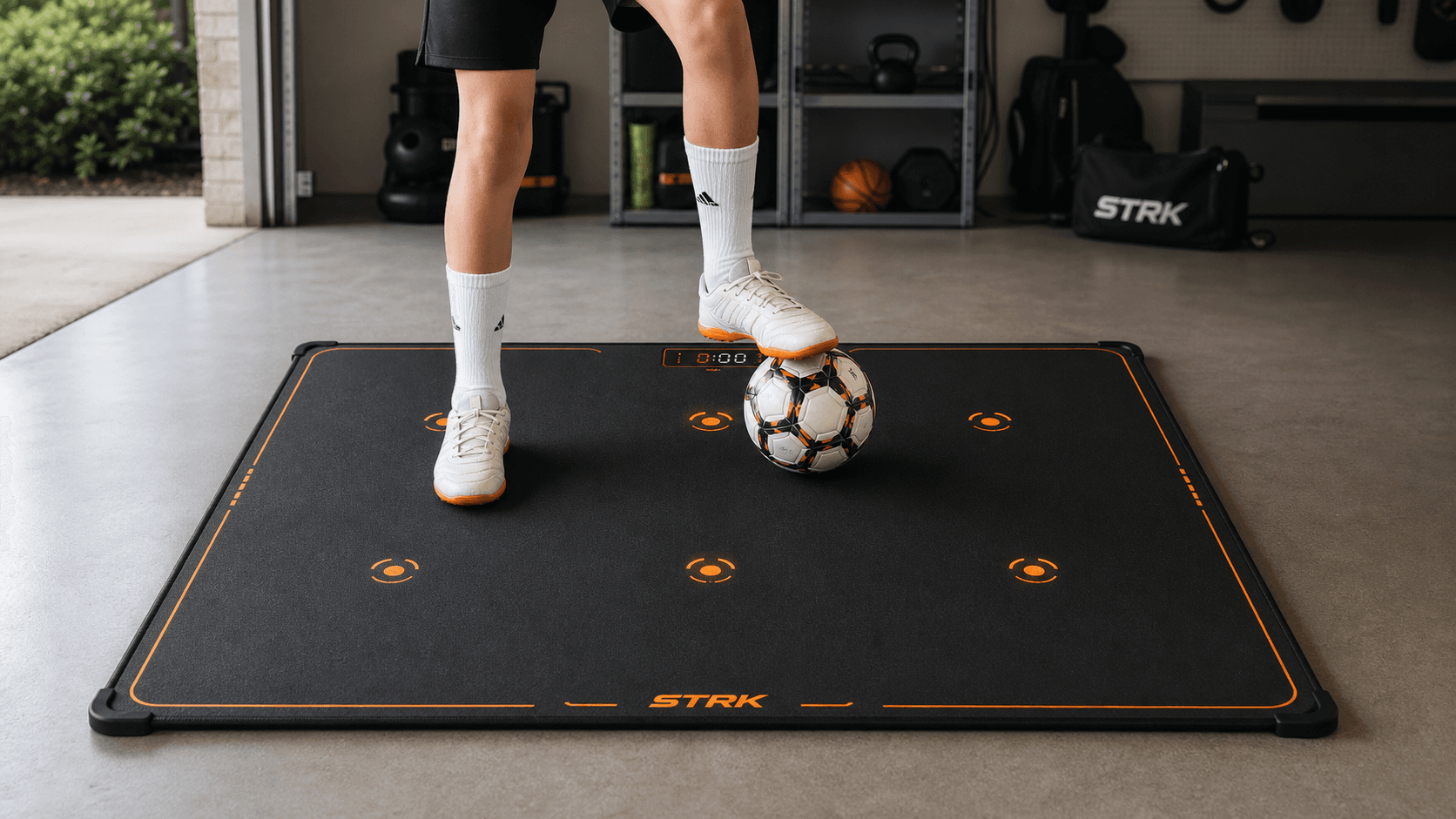
Weak Foot Soccer Training
Weak-foot training fails when it is optional. STRK makes it easy to assign paths and rounds that force the weaker foot to control, stop, roll, and push the ball with purpose.
Run the same path with both feet and compare control quality.
Use slower timing until the weaker foot can stop the ball cleanly.
Build confidence through repeatable target arrivals instead of random juggling goals.
Why the weak foot avoids pressure
Players naturally choose the foot they trust. A target path gives the weaker foot a clear job and removes the excuse to drift back to the stronger side.
Train simple actions first
Start with inside-foot control and sole-roll stops before asking for fast cuts or diagonal pushes. Clean contact matters more than speed.
Make both-foot work normal
Every STRK session can include one strong-foot round, one weak-foot round, and one mixed round. That makes development balanced without adding a separate workout.
Session ideas
Make the next touch measurable.
Mirror path
Complete one target path with the strong foot, then repeat it with the weaker foot at a slower pace.
Weak-foot stop
Move the ball to each lit target and stop it using only the weaker foot.
Mixed-foot reaction
Use the nearest appropriate foot when the cue appears, then repeat the round with the weaker foot leading.
Common questions.
How long does weak-foot training take?
It depends on the player, but short frequent reps are more useful than occasional long sessions.
Should weak-foot drills be slower?
At first, yes. Speed should come after the player can make clean, balanced contact.
Keep exploring
Training guides
Clubs, academies, and distribution partners can contact [email protected].