Speed and agility
Speed matters when the next touch stays clean.Train both together.
For players and coaches who want speed work connected to technical ball control.
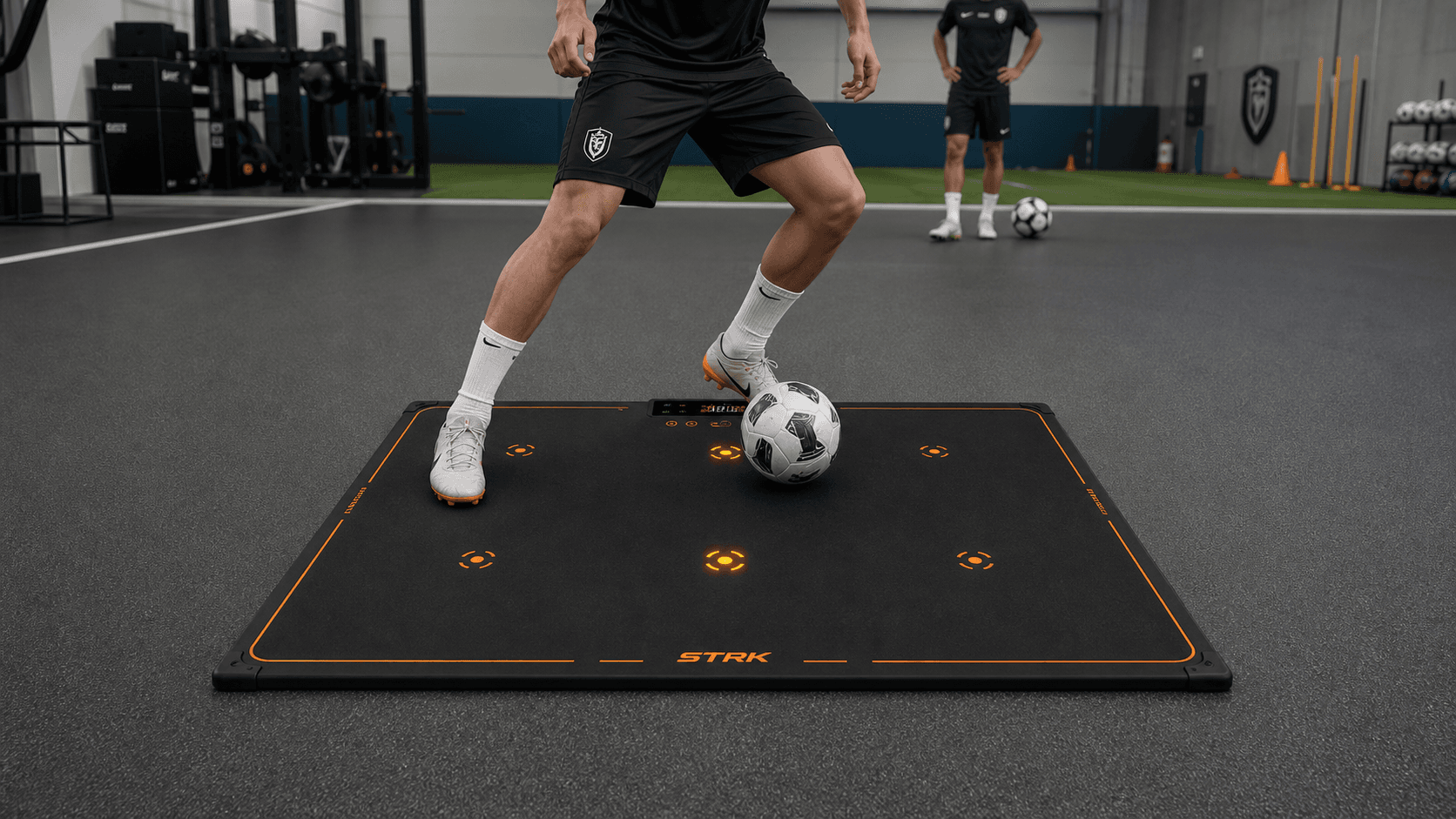
Soccer Speed And Agility Training
Soccer speed is not only a sprint. Players accelerate, brake, turn, shield, and touch the ball while reading the next cue. STRK helps combine agility and ball control in compact sessions.
Train acceleration and braking with a ball, not only open-space running.
Use diagonal targets to practice direction changes and recovery steps.
Judge control quality before reducing the cue window.
Agility with a football task
The player must react, move the ball, stop or redirect it, and stay ready. That is closer to match movement than isolated foot speed.
Braking is part of speed
Players who cannot stop cleanly lose the next action. STRK target arrivals make braking and balance visible.
Add pressure gradually
Start with fixed paths. Then reduce rest, add random targets, or place a round after conditioning work.
Session ideas
Make the next touch measurable.
Diagonal accelerate
Push the ball toward a far target and arrive balanced enough to stop inside the zone.
Brake and turn
Stop at the target, turn across the body, then exit toward the next cue.
Fatigue control round
Run a short STRK sequence after a sprint or strength set and keep touch quality high.
Common questions.
How is soccer agility different from general agility?
Soccer agility includes the ball, pressure, body shape, and the next technical action.
Can speed training be done indoors?
Compact speed and agility elements can be trained indoors, but players need safe space and should avoid full sprinting in tight rooms.
Keep exploring
Training guides
Clubs, academies, and distribution partners can contact [email protected].