Youth footwork
Youth footwork should build control first.Speed comes later.
For youth players, parents, and coaches who want footwork drills that stay connected to ball control.
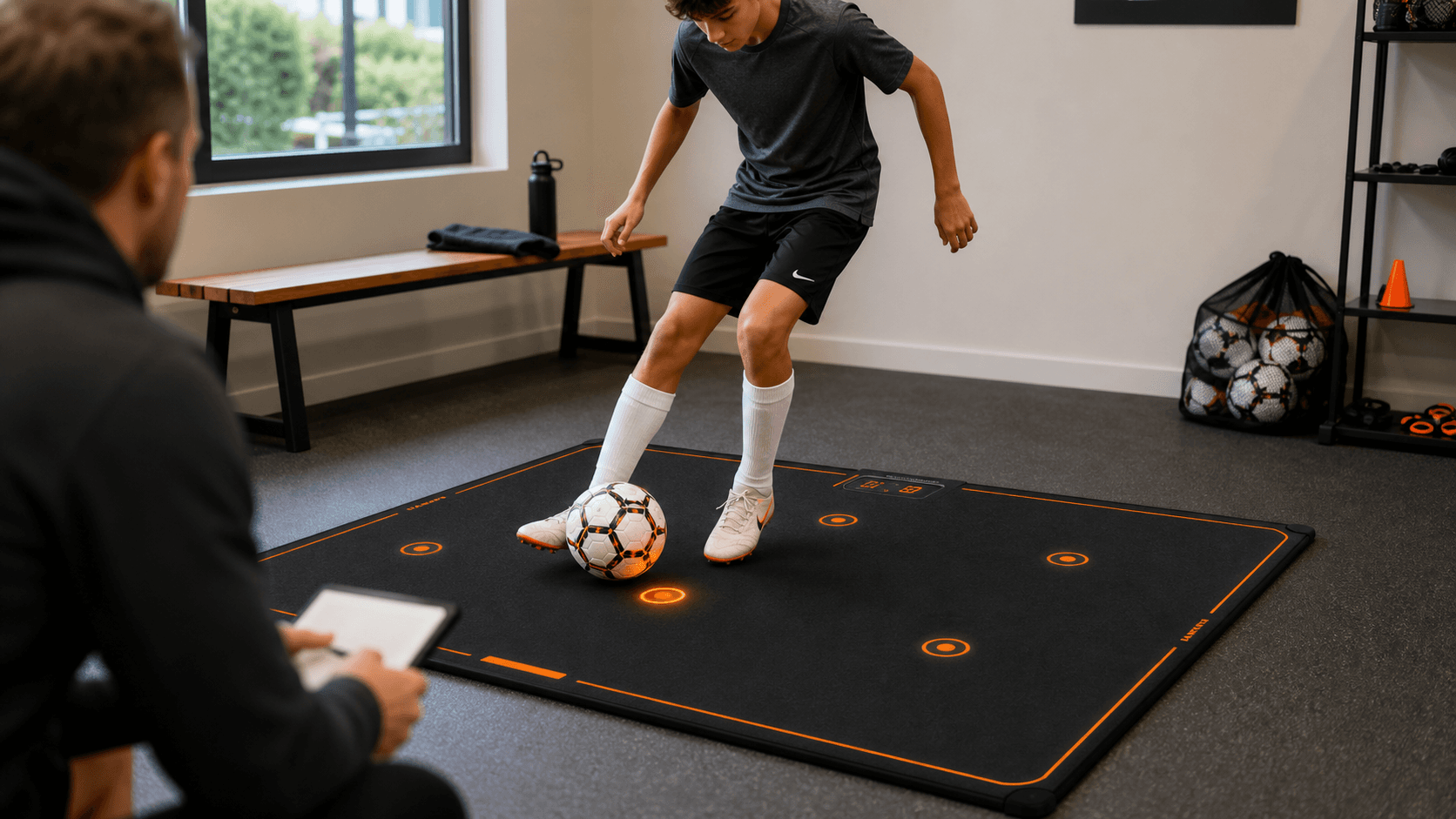
Youth Soccer Footwork Drills
Young players improve faster when drills are clear, short, and repeatable. STRK gives youth footwork a target system so players learn where the ball should go, not only how fast the feet can move.
Keep sessions short enough for consistent focus.
Judge clean touches, body balance, and weaker-foot effort.
Use slower levels before random reaction rounds.
The youth training priority
At younger ages, technique should come before speed. The player needs to feel the ball, stop it cleanly, and recover body shape before racing the clock.
Parents can coach simple outcomes
Watch whether the ball arrives in the target, whether the player stays balanced, and whether both feet get real work.
Make repetition visible
The mat gives each rep a clear destination. That makes practice easier to understand and easier to repeat next session.
Session ideas
Make the next touch measurable.
Inside-foot triangle
Move between three targets using inside-foot touches, stopping fully before changing direction.
Outside-foot escape
Push the ball out of the center toward a side target, then recover stance.
Both-foot finish
End every session with one strong-foot round and one weak-foot round on the same path.
Common questions.
How long should youth footwork drills last?
Short blocks of five to ten minutes are often enough, especially when the player is focused on clean technique.
Should kids train reaction drills every day?
They should train with variety and rest. Reaction work is useful, but it should not replace free play, team practice, or recovery.
Keep exploring
Training guides
Clubs, academies, and distribution partners can contact [email protected].