Footwork drills
Better footwork starts with the ball under control.Not just fast feet.
For players who want sharper feet without turning football training into ladder drills only.
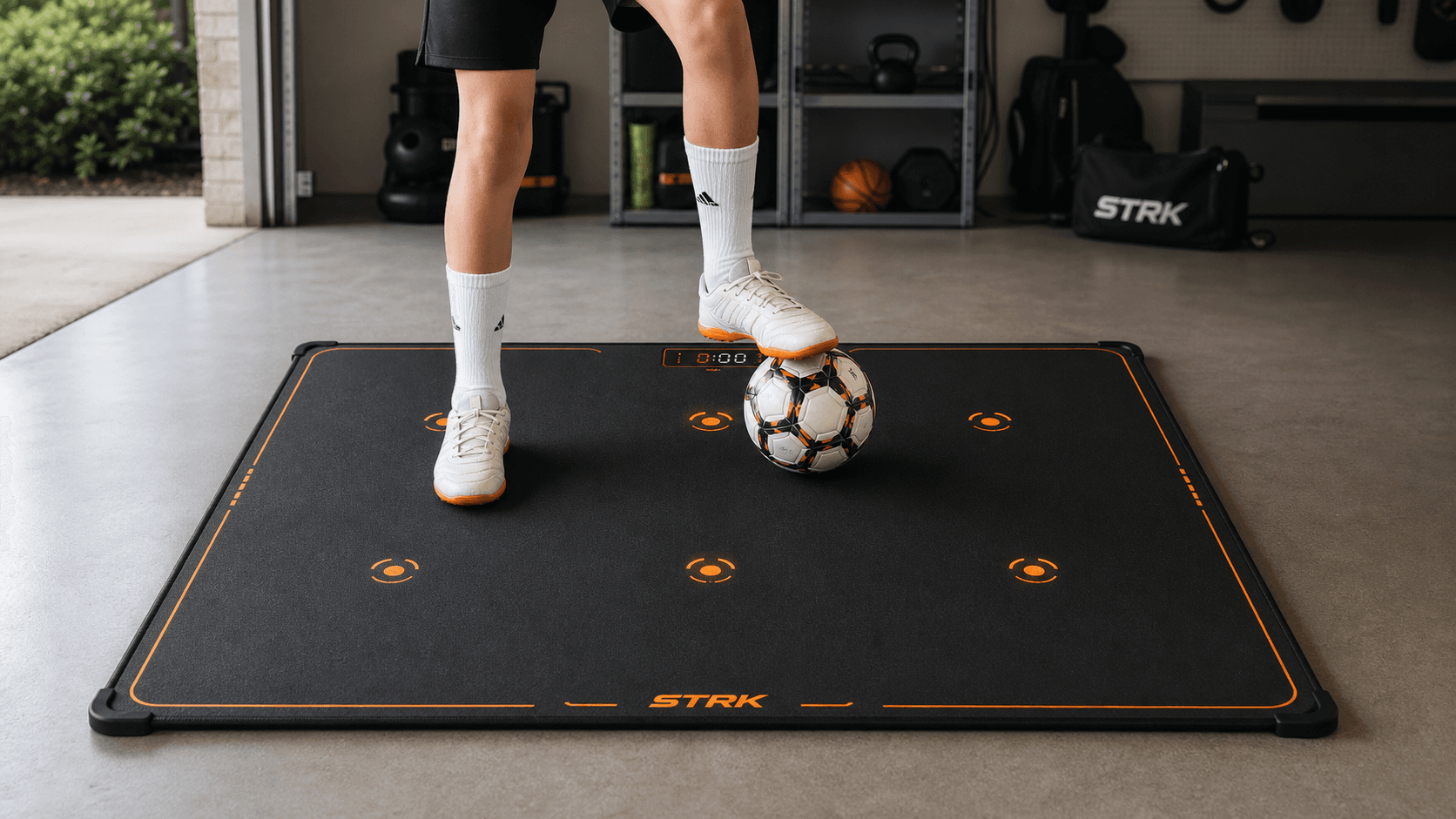
Football Footwork Drills
Footwork matters most when it changes what the player can do with the ball. STRK places targets under the player's feet so quick steps, ball control, and body balance develop together.
Train short steps and controlled touches in the same drill.
Use six target zones for diagonals, lateral movement, and recovery steps.
Progress from fixed paths to reaction cues after the movement is clean.
Fast feet are only useful with control
A player can move quickly through a ladder and still take heavy touches in a match. STRK keeps footwork connected to the ball, so speed has a technical purpose.
Footwork for tight spaces
Compact target changes help players practice the small steps needed near defenders: adjust, shield, push, stop, and go again.
Build rhythm before pressure
Start with known paths and clean body shape. Add randomness only when the player can keep the ball close without reaching or hopping.
Session ideas
Make the next touch measurable.
Inside touch ladder
Move between three close targets using inside-foot touches, keeping the steps short and the hips ready to turn.
Diagonal push and brake
Push the ball diagonally to a far target, then brake with small recovery steps before the next cue.
Shield-side reset
Move the ball across the body and recover stance as if protecting it from pressure.
Common questions.
Are footwork drills different from agility drills?
They overlap, but football footwork should include the ball. Agility without touch can help movement, but it does not train ball control by itself.
Can beginners use STRK for footwork?
Yes. Beginners should use slower, fixed paths first and judge the session by touch quality.
Keep exploring
Training guides
Clubs, academies, and distribution partners can contact [email protected].