Winger drills
Wingers need the first step and the next touch.Explode under control.
For wide players who need sharper stop-start movement, cleaner outside-foot touches, and quicker direction changes.
Soccer Winger Training Drills
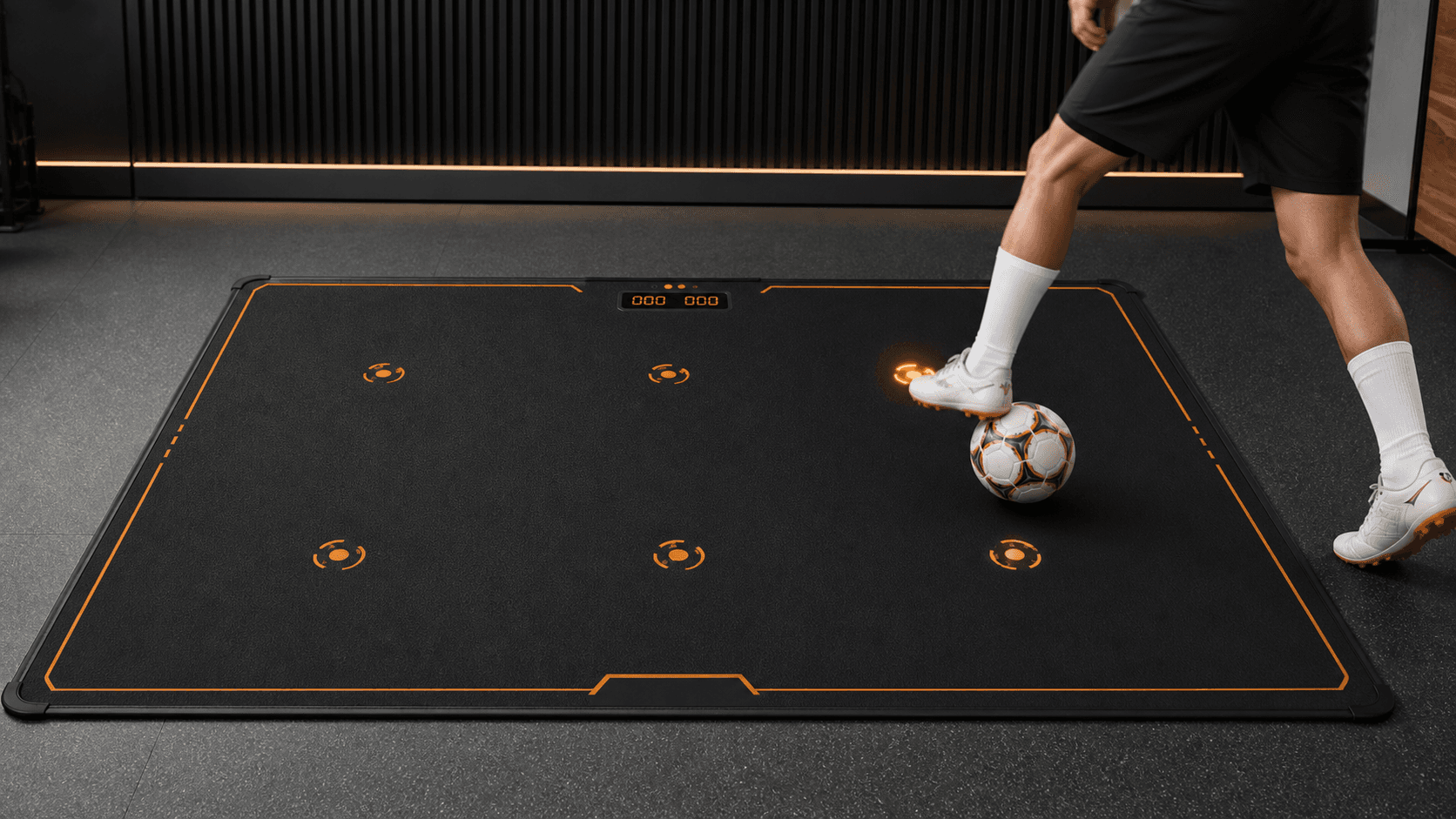
Wingers create separation with touch weight, timing, and body control. STRK gives wide players a target-based way to train outside-foot pushes, braking steps, and weak-foot exits.
Use outside-foot touches to move away from pressure.
Train braking and recovery after every burst.
Add random cues only after the ball stays close.
Speed must carry the ball
A winger can be fast and still lose the ball. STRK keeps speed tied to controlled target arrivals.
Train the stop as much as the go
Effective wide players can accelerate, brake, and change direction without losing balance. Target drills make the braking touch measurable.
Weak-foot exits matter
If the defender knows the winger always returns to one foot, the attack becomes predictable. Both-foot rounds widen the options.
Session ideas
Make the next touch measurable.
Outside push and brake
Push the ball toward a side target with the outside foot and stop it before the next cue.
Cutback path
Move toward a wide target, pull the ball back through center, and recover stance.
Weak-foot wing exit
Repeat the side path using the weaker foot at a slower tempo.
Common questions.
What drills help soccer wingers?
Outside-foot pushes, first-touch exits, stop-start control, weak-foot work, and reaction direction changes are useful winger drills.
Can wingers train without a field?
They can train close control, touch timing, weak foot, and reaction in a compact setup, while sprinting and crossing still need field work.
Keep exploring
Training guides
Clubs, academies, and distribution partners can contact [email protected].