Winger drills
Wingers need fast changes with the ball close.Explode after control.
For wide players who want sharper dribbling, direction changes, and explosive first steps.
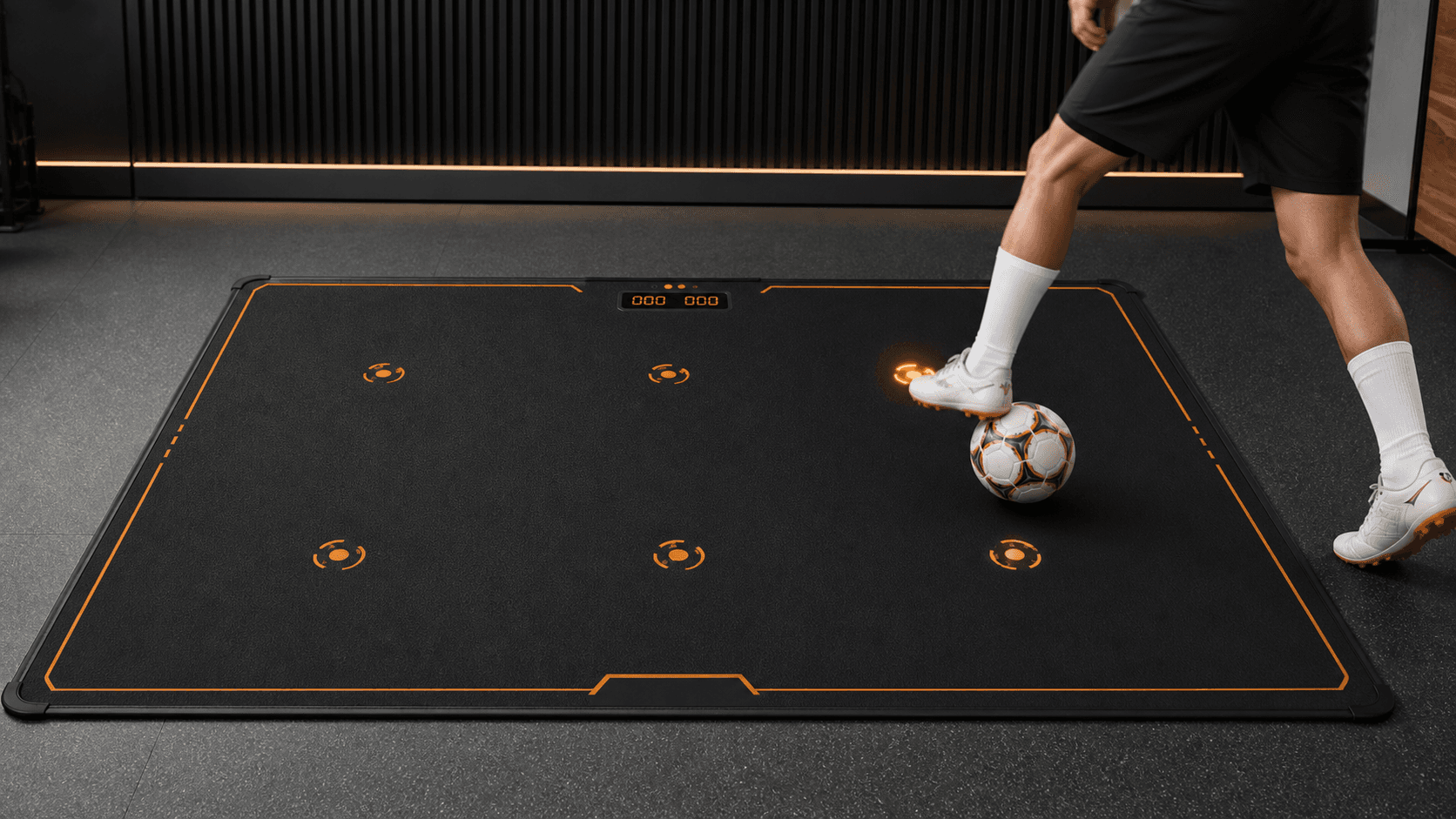
World Cup Winger Training Drills
Top wingers create separation with rhythm changes, outside-foot pushes, and quick cuts. STRK turns those actions into compact target drills that can be repeated at home.
Train stop-start rhythm before maximum speed.
Use outside-foot touches to exit into space.
Keep the ball close enough to cut again on the next cue.
Stop-start control
The winger's advantage often comes from slowing the defender, then accelerating. The ball must stay close during both phases.
Outside-foot exits
An outside-foot push can create a running lane. On STRK, the target helps control the length and angle of that push.
Recover for the second move
A wide player rarely needs only one action. After the first cut, the body should be ready for another touch or change.
Session ideas
Make the next touch measurable.
Outside push
Push from center to a side target with the outside foot, then stop the ball in the zone.
Stop-start round
Pause at the target, then accelerate toward the next cue with a controlled touch.
Cutback path
Move wide, stop, then cut back across the body toward the next lit target.
Common questions.
What should wingers train besides speed?
Wingers should train touch weight, direction changes, weak foot, stopping balance, and the ability to accelerate after control.
Can winger drills be trained indoors?
Compact technical parts can be trained indoors, but players need enough safe space and should avoid full sprinting in tight rooms.
Keep exploring
Training guides
Clubs, academies, and distribution partners can contact [email protected].