World Cup footwork
Footwork should end with control of the ball.Fast feet, clean touch.
For players who want World Cup inspired footwork drills that connect quick feet to real ball control.
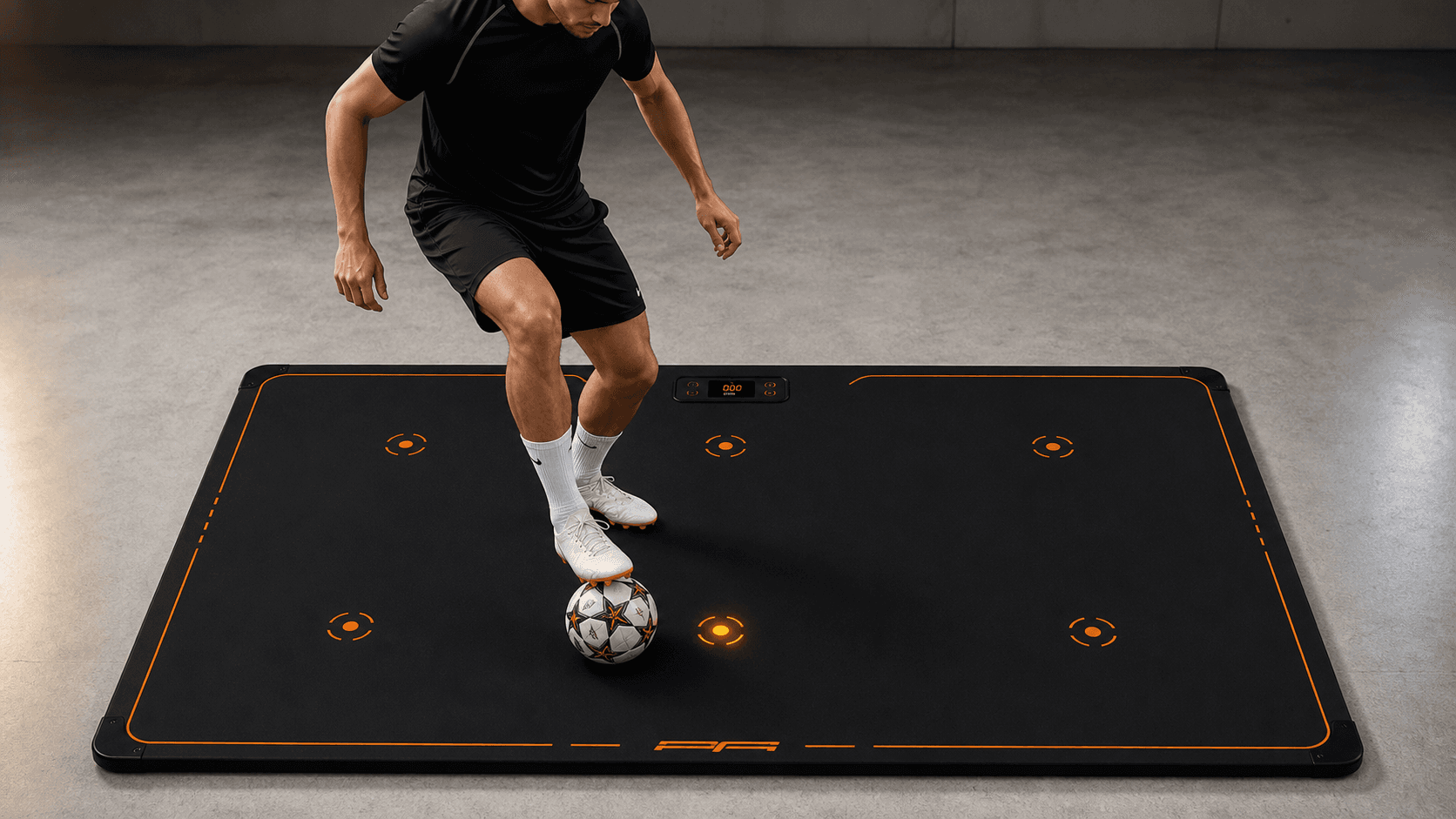
World Cup Footwork Drills
Good footwork is not just moving the feet quickly. In soccer, the player must move around the ball, adjust body shape, and control the next touch. STRK makes footwork target-based and ball-centered.
Use footwork to improve the next touch.
Train braking and balance after direction changes.
Alternate strong-foot and weak-foot exits.
Quick feet need a purpose
Ladder-style speed can help coordination, but players still need to control the ball. STRK gives the footwork a visible football target.
Train arrival quality
The best sign of useful footwork is whether the player arrives balanced enough to make the next touch.
Connect to tournament roles
Midfielders, defenders, wingers, and strikers all need short foot adjustments before receiving or changing direction.
Session ideas
Make the next touch measurable.
Step-around touch
Step around the ball, then use the inside foot to move it to the target.
Brake and reset
Move to a diagonal target, stop the ball, and recover stance before the next cue.
Two-foot exit
Alternate right-foot and left-foot exits through the same path.
Common questions.
What makes soccer footwork different from ladder drills?
Soccer footwork should connect body movement to ball control, receiving angles, direction change, and recovery for the next action.
Can STRK replace an agility ladder?
STRK is not the same tool, but it can support footwork that stays connected to a soccer ball and target-based touches.
Keep exploring
Training guides
Clubs, academies, and distribution partners can contact [email protected].