Reaction lights
Reaction lights are better when the ball is involved.STRK keeps it football.
For players and coaches comparing reaction light systems and wanting football-specific work with the ball.
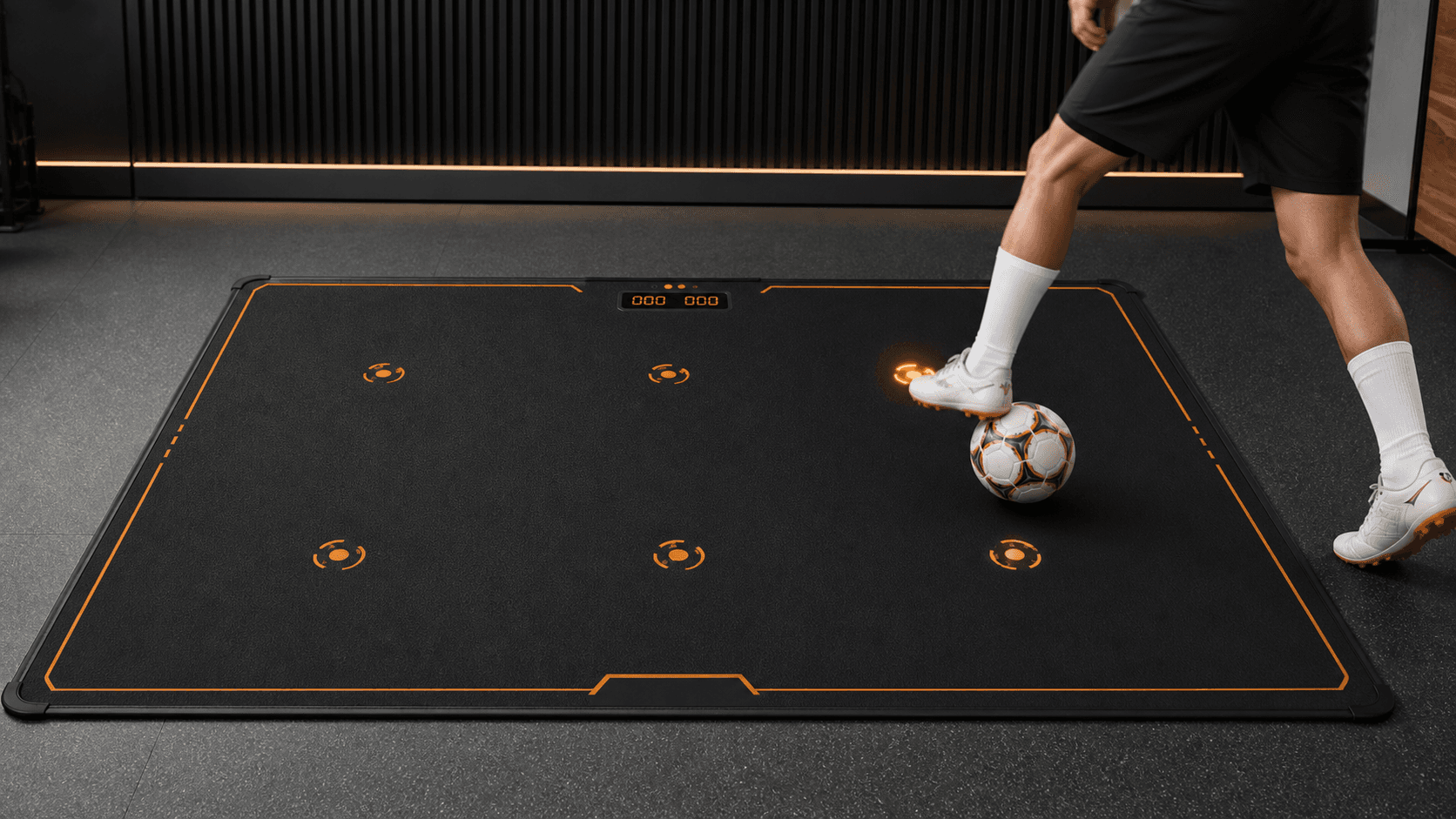
Soccer Reaction Lights With Ball
Many reaction light systems train hand taps or general movement. STRK puts the cue on a football mat so the player reacts by controlling the ball to a target.
The cue leads to a football touch, not a hand response.
Players train first touch, direction change, and recovery together.
Random timing is introduced after the player can control fixed paths.
Why the ball changes the drill
A light cue alone can train awareness. Adding the ball forces the player to solve touch weight, balance, and direction at the same time.
Avoid light-chasing
The player should not sprint randomly after lights. The goal is a clean football action to the target and a balanced reset for the next cue.
Use it as a technical station
STRK can sit alongside passing, finishing, or mobility work as a compact technical reaction station.
Session ideas
Make the next touch measurable.
Cue-to-touch
React to the lit target, move the ball by foot, and stop it inside the zone.
Outside-foot reaction
Use outside-foot touches for side targets and recover quickly after each push.
Controlled random round
Use random lights only when the player can keep the ball close during fixed rounds.
Common questions.
Are reaction lights good for soccer?
They can be, especially when the reaction leads to a real soccer action with the ball.
How is STRK different from normal reaction lights?
STRK is built as a football mat, so the cue is tied to touch, footwork, and ball control.
Keep exploring
Training guides
Clubs, academies, and distribution partners can contact [email protected].